
Designing a Sunflower Border: Inspiration for Small and Large Gardens
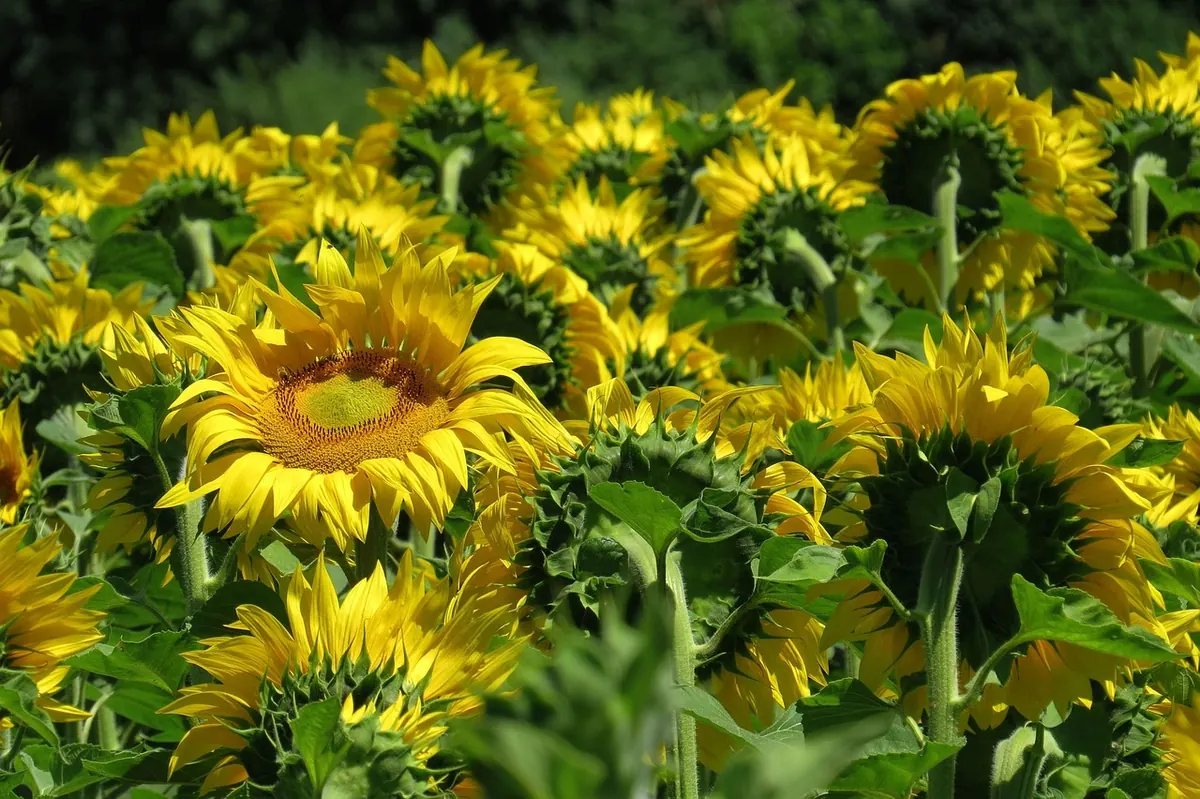
A sunflower border can be much more than a single row of tall yellow faces at the back of a bed. It can be a summer-long composition: low gold at the path edge, branching rust-red cultivars in the middle, open-faced flowers humming with bees, and one deliberate clump of giants that makes you stop. The trick is to design for the view you actually have—from the kitchen window, the garden bench, or the gate—and to give each plant enough sun, air, and support. Whether your border is three metres long or thirty, the same principles apply.
Begin With the View and the Growing Conditions
Before you choose a single seed packet, stand where you will look at the border most often. A sunflower border that looks good from the sofa but blocks the path to the shed will soon become a nuisance. Note how much direct sun the bed receives, where the wind hits, and whether the soil stays damp after rain. Sunflowers want full sun and reasonably free-draining soil; most will sulk in deep shade or waterlogged ground.
Tall cultivars cast shade, so place them where that shade is useful—over a seating area in the afternoon, for instance—or at the back of a bed where shorter companions still catch the light. In a narrow border against a fence, the fence becomes both backdrop and support. In an island bed, you can put a tall clump near the centre, but leave enough room to walk around it for staking, watering, and deadheading. Decide, too, whether you want cut flowers. Branching sunflowers give you more stems over a longer period; single-stem giants give you one dramatic head and a lot of presence.
Build the Border in Height Layers
Height layers keep a sunflower border from looking like a school photograph, with everyone lined up by size. Let the layers overlap slightly so the planting reads as a whole. A simple framework works in most gardens:
- Front layer, roughly 30–60 cm: dwarf sunflowers, calendula, sweet alyssum, compact marigolds, violas, and low herbs such as thyme or oregano.
- Middle layer, roughly 60–150 cm: medium sunflowers, cosmos, zinnias, salvia, coneflower, and shorter tithonia.
- Back layer, roughly 1.5–3 m: tall sunflowers, amaranth, Verbena bonariensis, and ornamental grasses for vertical contrast.
Give sunflowers room to breathe. Dwarf types may need 30–45 cm between plants; tall, branching types often need 60 cm or more. More spacing means better airflow, fewer tangled stems, and easier access for staking. If you are sowing direct, thin seedlings early rather than letting them compete. A crowded border may look generous in June and chaotic by August.
Use Color Echoes, Not Just Yellow
Yellow is the obvious sunflower color, but a border made only of yellow can feel flat. Use color echoes instead: repeat a shade in two or three places so the eye travels along the bed. A lemon-yellow dwarf sunflower at the front can echo a softer yellow calendula nearby and a pale yellow coneflower farther along. For a hotter composition, pair bronze and rust sunflowers with marigolds, red amaranth, and deep orange zinnias.
Purple and blue are natural partners for gold. Salvia, lavender, verbena, and Russian sage make the yellow look cleaner and bring in pollinators at the same time. Foliage counts as color, too: bronze fennel, dark purple basil, silver santolina, and blue-green grasses add depth without another flower color. In a small garden, keep to two flower colors plus green and repeat them confidently. In a large border, you can use three or four, but give each one a clear patch rather than scattering single plants like confetti.
Choose Pollinator Companions
Open-centred, single-flowered sunflowers are the best choice for bees and other insects; many double forms are bred for cutting and offer little in the way of pollen or nectar. Plant them in groups rather than single specimens, because pollinators find patches more easily than isolated flowers. Around them, add borage, calendula, lavender, oregano, coneflower, cosmos, zinnia, and Verbena bonariensis. These also fill the gaps when sunflowers are still young.
Leave a few seedheads standing at the end of the season for birds, and avoid spraying the border with insecticides, especially while flowers are open. If you grow sunflowers mainly for cutting, keep a separate row or patch for pollinators so you are not stripping the border of every open bloom. A border that feeds insects and birds as well as the eye feels alive, and that movement is part of the design.
Create a Focal Point
A focal point gives the border a reason to be looked at. In a small garden, one clump of three tall sunflowers at a corner, beside a bench, or at the end of a path is enough. Choose a distinctive cultivar—deep red, pale cream, or a particularly large-headed type—and let it stand alone rather than mixing it through the whole bed. In a larger garden, repeat focal clumps at intervals so the border has rhythm, but do not make every plant a star.
Containers can act as movable focal points. A dwarf sunflower in a generous pot by the door, underplanted with trailing nasturtium or sweet alyssum, brings the border idea onto a patio. Tall sunflowers can be grown against an obelisk or a sturdy fence, but tie them in early. A plant that flops after a storm loses its focal-point status quickly.
Layout Ideas for Small and Large Gardens
Small gardens
Work with a narrow border rather than fighting it. A 60–90 cm deep bed can hold dwarf sunflowers at the front, medium cultivars against a fence, and a low edge of herbs or calendula. Choose one tall accent, not a forest of giants, and use vertical space on the fence or wall. Keep the path clear; sunflowers lean toward the light and can swallow a narrow walkway by midsummer. If space is tight, grow dwarf sunflowers in containers and use the border for pollinator-friendly companions.
Large gardens
Think in drifts and blocks. A wide border can carry a back row of tall sunflowers, a middle wave of medium types, and a front edge of low companions, with each group repeated along the length. On an island bed, place a central clump of tall sunflowers and ring it with lower planting so the bed reads from all sides. In a cutting garden, rows are practical; in a display border, irregular blocks look more natural. Leave maintenance gaps behind the tallest plants, and stake before the stems need it.
Practical Finish: Support, Water, and Succession
Sow sunflowers after the last frost, when the soil has warmed, and protect young seedlings from slugs. Water deeply during dry spells rather than giving little daily sprinkles; deep watering encourages roots to go down. Stake tall cultivars early, tying loosely with soft twine, and check ties as stems thicken. Deadhead some flowers to keep the border tidy, but leave others to ripen for birds.
For a longer display, sow a few seeds every two to three weeks through late spring and early summer. The first plants will fade as the later ones come into bud, and the border will not collapse into a row of drooping stems. Edit as you go: cut back finished annuals, fill gaps with a quick cosmos or zinnia, and remove anything that has lost its shape. A sunflower border is never finished on planting day. It is a summer project, best started with one clear view, one height plan, and one color echo you can repeat with confidence.
Photo: Uschi_Du / Pixabay