
Beginner's Guide to Choosing Your First Sunflower Variety
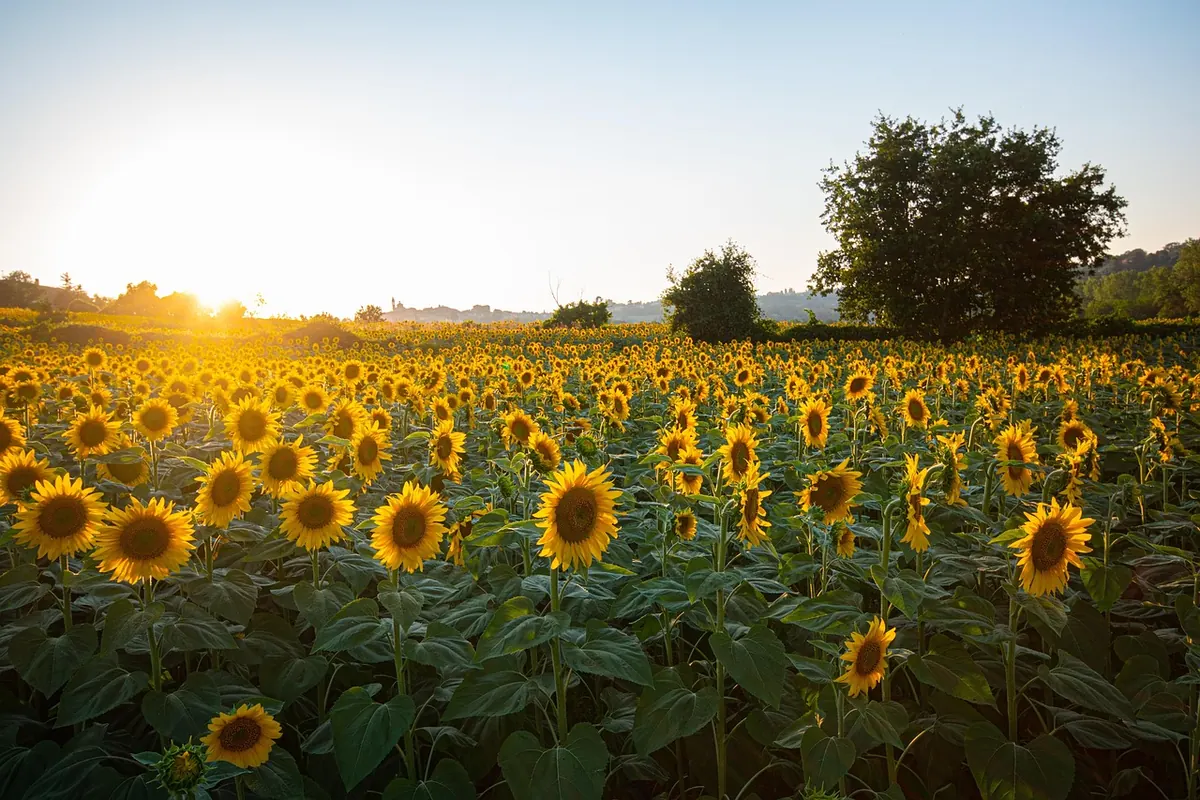
The first sunflower packet is a small decision that shapes the whole season. Sow a towering seed variety on a windy balcony and you will spend August tying a plant taller than your door to a railing. Sow a knee-high dwarf in a long border and you will get tidy, charming plants that leave most of the space empty. Neither outcome is a disaster, but twenty minutes of matching before you sow saves a summer of adjusting afterwards. The order that works is simple: climate and season length first, then the space you actually have, then what you want from the flowers — seeds, stems, a screen, or bees. Once those four are settled, the variety list narrows itself.
Start with your climate and your season
Sunflowers (Helianthus annuus) are fast, warm-season annuals, and they measure their lives in heat rather than in calendar dates. Seed packets usually quote somewhere between 60 and 100 days from sowing to first flower, with the tall, seed-heavy types sitting at the slower end. Treat that number as a guide rather than a promise: it assumes warm soil, full sun and steady water. In a cool summer, add a week or two.
If your season is short, or your summers are foggy and mild, favour early and compact varieties, and give them a head start indoors. Sunflowers resent root disturbance, so raise seedlings in deep modules or soil blocks and move them out young, before the taproot has curled around the base of the pot. Direct sowing works beautifully anywhere the soil warms reliably; it is simply slower.
Heat brings its own arithmetic. In hot, dry gardens, sunflowers are close to unbothered, but tall varieties still want deep watering while they build stems, and they will topple in exposed, windy sites whatever the temperature. In humid summers, the priority is air movement — wider spacing, fewer plants, and avoid crowding them against a wall where leaves stay wet overnight.
Reading the packet honestly
Two numbers matter more than any marketing on the front. The first is days to maturity. The second is the mature height, which is usually given as a range and should be believed at the top of it. If a packet says 180–240 cm, plan for 240.
Match the variety to the space you have
Sunflowers come in three rough sizes, and almost every beginner mistake comes from mixing them up. Think of the groups as tools rather than categories.
- Tall types (roughly 2.5–3.5 m): classic seed varieties such as 'Mammoth' and Russian-type giants. Use them at the back of a border, along a fence, or as a summer screen. They need staking and shelter from wind, and they cast real shade.
- Mid-height types (1.5–2 m): the comfortable middle ground, including multi-branching mixtures and many of the deep red and pale lemon varieties. Good for picking, for the middle of a bed, and for a long season of flowers rather than one big head.
- Dwarf and semi-dwarf types (60–120 cm): 'Sunspot', 'Elf', 'Teddy Bear' and similar. Made for containers, balconies, raised beds and the front of a border. They still demand full sun — a dwarf sunflower in shade is a sad, leggy thing.
If you are growing in pots, give even a dwarf a container of at least 30 cm across, and go larger for anything taller. Big sunflowers in small pots dry out twice a day in July and lean badly after rain. One more siting note: young heads track the sun across the sky, but mature heads settle into facing roughly east. Plant accordingly if you want to look at them from the kitchen window.
Choose by what you want from the plant
For seeds
Look for large-headed, open-pollinated varieties with big central discs. Let the heads stay on the plant until the back turns brown and the seeds feel plump, then cut with a good length of stem and hang them somewhere dry and airy, with a paper bag or old net curtain tied over the head to catch seeds and keep birds out.
For cut flowers
Florist-bred single-stem series such as 'Sunrich' and 'ProCut' are the ones to know. They are largely pollen-free, which means no yellow dust settling on the tablecloth, and they produce one uniform stem per plant, which is what a vase wants. Cut when the petals have just lifted off the centre disc, early in the morning, and condition them in deep water.
For a screen or a windbreak
Sow the tallest variety you can find in a double row, and stagger the sowing by two or three weeks so the screen lasts longer. Be aware that sunflowers are allelopathic to some degree — they release compounds that can slow neighbouring plants — so keep them at the edge of a vegetable bed rather than in the middle of it.
For children, pots and quick wins
Dwarfs and early single-stem varieties. Fast germination, visible daily growth, and a flower within reach of a small pair of hands.
Pollinator value: not all sunflowers are equal
The open, single-flowered sunflower with a broad, pollen-covered centre is one of the most generous plants in a summer garden. Bees, hoverflies and small solitary bees work the disc for nectar and pollen, and the flower is also wind-pollinated, which is why seed varieties set so reliably in open ground.
The doubles change that. A fully double 'Teddy Bear' has almost no accessible nectar or pollen — the florets have been bred into petals — so it is decorative rather than useful. Pollen-free cutting types sit somewhere in between: brilliant for the vase, close to worthless for insects. If pollinators are the point, choose single-flowered, pollen-rich varieties, leave the seed heads standing into autumn for birds, and consider a perennial species sunflower for late-season flowers once you have a little more experience.
Branching or single-stem?
This is the second-most useful distinction after height. Single-stem varieties put all their energy into one large head: dramatic, uniform, unbeatable for cutting and for a single statement at the back of a bed. Branching varieties produce a main stem with side shoots, each carrying a smaller flower, over several weeks. They give you colour for far longer, they suit pollinators better, and they look less regimented. Some branching types benefit from pinching out the centre bud when the plant is young, which encourages more side shoots — worth trying on a few plants and comparing.
A simple first-year plan
Resist the urge to buy twelve packets. Three varieties, chosen for three jobs, will teach you more than a scattered collection.
- One dwarf for a pot, so you have a sunflower at eye level.
- One mid-height branching variety for picking and for insects.
- One tall seed variety if you have space and shelter — and a stake ready before it needs one.
Sow in two batches, two to three weeks apart, to spread the flowering season. Water deeply rather than often, mulch to keep moisture in, and check the stems after any storm. Keep a short note of what flowered when, how tall it actually got, and whether you would grow it again; that page will be worth more next January than any catalogue description. And if a variety disappoints in its first year, remember that sunflowers are cheap to experiment with — the cost of being wrong is one packet and one square metre of soil.
Photo: phfilipposarci / Pixabay